Key takeaways
- React devs already know components and state — Rails adds the backend and database.
- Rails favors convention over configuration, so you write less boilerplate.
- Learn Ruby basics, MVC, ActiveRecord, and routing to become full-stack.
- You can keep React on the frontend and use Rails as an API.
- Related: Ruby object-oriented programming and how to set up a web development environment.
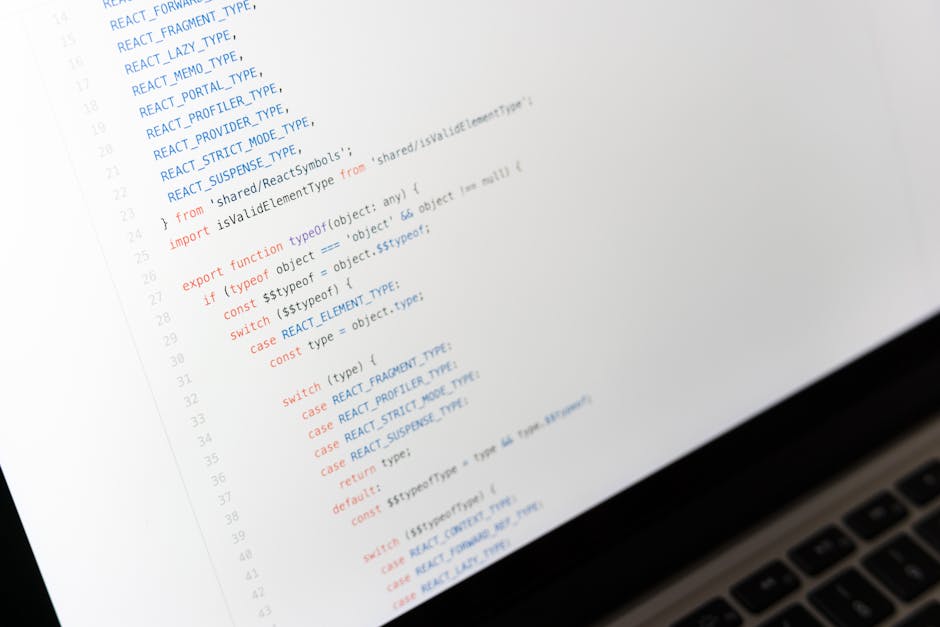
React vs Rails: what each handles
| Layer | React | Rails |
|---|---|---|
| Frontend UI | Yes | Views (or API-only) |
| Backend logic | No | Yes |
| Database | No | ActiveRecord |
| Convention | Flexible | Strong defaults |
Introduction: Why Frontend Developers Should Learn Ruby on Rails
As a React developer, you already understand component logic, state management, and how to consume APIs. But bridging the gap to the backend—databases, server logic, and architecture—can often feel overwhelming. Many roadmaps complicate this transition by diving straight into "magic" terminal commands without explaining the underlying paradigms. Ruby on Rails offers a fantastic antidote to this complexity. Known for its convention-over-configuration philosophy, Rails allows frontend developers to build fully functional, production-ready full-stack applications in a fraction of the time it takes with traditional Node.js setups.
By understanding how Ruby on Rails mirrors and complements the mental models you have already built in React, you can transition smoothly from a pure frontend specialist to a versatile full-stack engineer. In this ultimate roadmap, we will explore core concepts, mental model shifts, architectural comparisons, and a step-by-step learning path to help you master Rails.
Understanding the Paradigm Shift: React vs. Ruby on Rails
When transitioning from a component-driven ecosystem like React to a monolith framework like Ruby on Rails, the hardest part isn't learning a new language—it is shifting your architectural mindset. React focuses heavily on the view layer, managing UI state in the browser, and asynchronously fetching data from external endpoints. Ruby on Rails, on the other hand, embraces the Model-View-Controller (MVC) architectural pattern, handling routing, database queries, business logic, and server-rendered HTML natively.
The Model-View-Controller (MVC) Architecture Explained
In Rails, the application is cleanly divided into three distinct responsibilities:
- Models: Represent your data and business logic, typically interfacing directly with the database using ActiveRecord.
- Views: Render the user interface (traditionally through HTML templates, though increasingly via API JSON responses or modern tools like Hotwire).
- Controllers: Act as the traffic cop, receiving requests from the browser, interacting with models, and deciding which view or data to return.
For a deeper dive into architectural patterns, you can read more about Model-View-Controller design principles on Wikipedia.
Core Concepts Mapping: React to Rails Dictionary
To accelerate your learning curve, it helps to map what you already know in JavaScript and React directly to Ruby and Rails equivalents.
| React / JavaScript Concept | Ruby / Rails Equivalent | Description |
|---|---|---|
useState / Redux | ActiveRecord Models & Database State | Managing application state moves from browser memory to persistent relational database tables. |
| React Router | Rails Router (config/routes.rb) | Mapping incoming HTTP requests to specific controller actions rather than client-side paths. |
| Axios / Fetch API | ActiveModel & Controller Actions | Backend handlers that process incoming parameters and return serialized JSON or HTML. |
| npm / yarn | RubyGems & Bundler | Package management systems for installing third-party libraries and dependencies. |
The Step-by-Step Roadmap to Rails Mastery
Transitioning successfully requires a structured, milestone-based approach. Follow these phases to build competence without burning out.
Phase 1: Master the Ruby Language Fundamentals
Before touching Rails, you must understand Ruby. Ruby is a dynamic, open-source programming language with a focus on simplicity and productivity. Pay close attention to blocks, procs, lambdas, and Ruby's expressive syntax (such as omitting parentheses and utilizing built-in enumerable methods like map, select, and reduce).
Phase 2: Understand ActiveRecord and Database Migrations
ActiveRecord is Rails' built-in Object-Relational Mapping (ORM) system. It allows you to interact with databases like PostgreSQL or SQLite using pure Ruby objects rather than writing raw SQL queries. Learn how to write database migrations, establish associations (has_many, belongs_to, has_many :through), and validate data integrity.
Phase 3: Building APIs vs. Server-Rendered Apps
As a React developer, you have two primary paths when building with Rails:
- Rails API Mode: Use Rails purely as a robust backend API provider, continuing to build your frontend in React or Next.js.
- Rails with Hotwire (Turbo & Stimulus): Embrace full-stack Rails where the server renders HTML dynamically, eliminating the need for a complex JavaScript frontend build pipeline for many applications.
For official guidance and documentation on getting started, refer to the official Ruby on Rails website.
Frequently Asked Questions (FAQ)
1. Can I use React as the frontend for a Ruby on Rails backend?
Yes, absolutely. Rails provides an API-only mode (rails new my_app --api) which configures the framework specifically for serving JSON endpoints, making it an exceptional backend pairing for React, Next.js, or mobile applications.
2. How long does it take a React developer to learn Ruby on Rails?
Because you already understand web fundamentals, HTTP requests, and programming logic, you can typically become productive in Ruby on Rails within 4 to 6 weeks of consistent, hands-on project building.
3. What is Rails Hotwire and do I still need React if I learn it?
Hotwire is an alternative approach to building modern web applications without using a heavy client-side JavaScript framework. While you do not strictly need React if you master Hotwire, many modern teams still pair Rails APIs with React for highly interactive, complex dashboard applications.
4. Is Ruby on Rails still relevant for modern web development?
Yes. Rails powers massive global platforms like GitHub, Shopify, and Airbnb. Its continuous modernization—including import maps, Solid Queue, and Action Cable—ensures it remains a top-tier choice for rapid software development.
Frequently asked questions
Can a React developer learn Rails easily?
Yes. You already understand components, state, and building UIs. Rails adds the backend — Ruby, MVC, database access via ActiveRecord, and routing — to make you full-stack.
Should I use React or Rails?
They solve different layers. Use React for rich frontends and Rails for the backend and database. A common setup is React on the frontend with Rails serving a JSON API.
What should I learn first in Rails?
Ruby basics, the MVC pattern, ActiveRecord (the database layer), and routing. Rails' conventions then let you build features quickly with little boilerplate.
Is Ruby on Rails still worth learning in 2026?
Yes. Rails remains productive for building full applications fast, is widely used, and pairs well with a React frontend when you need one.
Can I use React with Rails?
Yes. A popular architecture uses Rails as an API backend and React for the frontend, letting each tool do what it's best at.
Comments
Post a Comment